The Missing Link Between Movement and Manual Therapy: A Trainer’s PerspectiveReview: Orthopedic Massage Course for Spine Mobility and Breathing at RSM International Academy
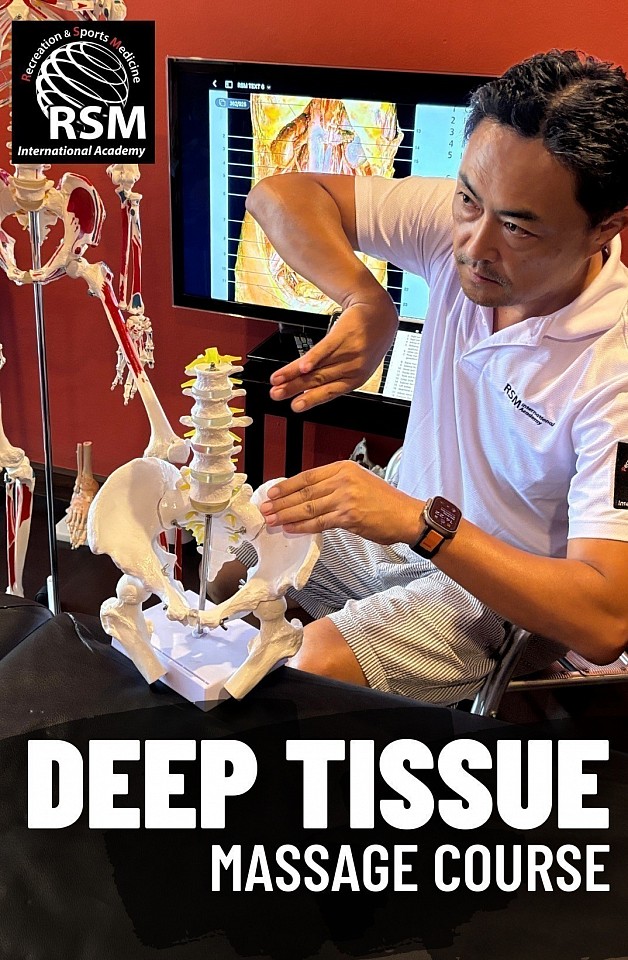
As a Sports Massage Trainer and Yoga/Pilates Instructor, my career is built on understanding movement. I thought I had a solid grasp on the body, having already completed the Trigger Point, Deep Tissue, Sports Massage, and Remedial Massage courses at RSM International Academy in the exact sequence recommended by Hironori Ikeda (MSc Sports Medicine). To be honest, by the time this weekend course rolled around, I was physically exhausted from the previous intensive trainings. However, my instinct told me that the Orthopedic Massage Course for Spine Mobility and Breathing was the piece I was missing to truly connect my manual therapy work with my movement instruction.
I am so glad I listened to that instinct. This wasn't just another weekend workshop; it was the most clinically relevant training of my entire career.
Beyond Basic Releases
I walked in expecting to learn a few releases to help stiff clients get deeper into a squat or a yoga twist. I walked out with a completely restructured understanding of spinal biomechanics. Hironori Ikeda didn't just teach techniques; he provided a comprehensive introduction to orthopedic assessment skills that bridged the gap between what I see in the gym and what I feel on the massage table.
We broke down lumbar, thoracic, and cervical movement patterns segment by segment. For a movement professional, having this level of anatomy knowledge for orthopedic massage is a game-changer. Supported by hundreds of visuals and fascia-layer diagrams, the spine finally stopped looking like a single column and revealed itself as a complex, interconnected machine.
The Breath-Movement Connection
One of the most transformative aspects for me as a Pilates instructor was the deep dive into breathing mechanics. We study breath in yoga, but rarely with this level of mechanical precision. I learned how a restriction in thoracic rotation or a locked rib cage directly impacts hip mechanics, scapular rhythm, and even knee loading.
We analyzed how the diaphragm interacts with the intercostal system and how dysfunctional breathing creates compensation patterns that ruin athletic performance. Seeing case studies in orthopedic massage therapy where shoulder tightness was resolved by treating the rib cage changed how I assess my athletes immediately.
Connecting the Modalities
Because I had done the previous courses, this weekend felt like assembling the final pieces of a puzzle. Trigger Point gave me palpation; Deep Tissue gave me depth; Sports Massage gave me the athletic context. However, this course provided the framework for developing treatment plans in orthopedic massage.
It taught me how to combine everything into a cohesive strategy. I finally understood the role of fascia in orthopedic massage not just as a tissue to be rubbed, but as a system that dictates spinal mobility. It turned my "random" techniques into a structured, evidence-based practice.
Safe Mobilization (LVLA)
A massive takeaway was learning LVLA (Low Velocity Low Amplitude) joint mobilization. As a trainer, I often shy away from the aggressive "cracking" (HVLA) techniques seen in some chiropractic or osteopathic settings. Hironori Ikeda explained the difference perfectly.
The LVLA techniques we learned were safe, controlled, and blended seamlessly with myofascial release. They are incredibly useful for my elderly Pilates clients and athletes who need joint space created without force. Unlike other workshops I’ve taken in Europe that felt overly theoretical, these orthopedic massage techniques were immediately applicable to the bodies I work with every day.
The "YouTube" Reality Check
One point Ikeda Sensei made really stuck with me: clients today can learn exercises from YouTube or apps. If we want to stay relevant as trainers and therapists, we must offer something an app cannot—real clinical skill.
This course focused heavily on assessment protocols used in orthopedic massage. It showed me that my value isn't just in leading a class, but in having the ability to assess a spine, identify the restriction, and treat it manually to unlock performance. This is the skill set that separates a generic instructor from a true movement specialist.
A Learning Environment for Pros
The class was a mix of physiotherapists, sports trainers, and yoga instructors, and the energy was incredible. The hands-on sessions were intense, acting like a miniature residency where we received real-time feedback on our palpation accuracy.
Hironori Ikeda’s ability to make complex orthopedic concepts feel approachable is unmatched. He understands that whether you are a physio or a Pilates teacher, the goal is the same: better human movement.
The Verdict
Looking back, the Orthopedic Massage and Spine Mobility training was a turning point in my professional identity. It corrected misconceptions I’ve held for years and gave me a new standard for what bodywork education should be.
If you are a trainer, instructor, or therapist working with the human body, this course is essential. It provides the advanced spinal assessment skills needed to survive and thrive in the modern wellness industry. It is, by far, the best therapeutic training I have ever experienced.